
Business Performance Through Fencing The Day I Realized Performance Is Not Created Under Pressure
Business Performance Through Fencing: Most people believe performance is created in the moment when it matters most. We admire the executive who delivers the perfect presentation, the leader who remains calm during a crisis, or the team that somehow finds a solution when the odds appear stacked against them. Looking from the outside, it is easy to assume that these people possess something special, something that allows them to rise above the pressure and perform when others cannot. Yet anyone who has spent time around elite performers soon discovers a different truth.
Pressure does not create performance. Pressure reveals it.
These things matter.
But people remember experiences – Experiences create stories.
Stories create culture – Culture creates engagement.
That lesson becomes remarkably clear in environments where decisions must be made quickly and where hesitation has immediate consequences. In those moments there is no time to search for confidence, discipline, trust, or focus. Whatever exists has already been built long before the moment arrived.
The same principle applies inside organisations.
A company may spend months preparing a strategy, discussing ambitions, and defining goals, but when uncertainty enters the market, when customers change their behaviour, or when competitors move faster than expected, the real culture of the organisation suddenly becomes visible. Teams respond based on habits rather than intentions. Leaders communicate according to what they genuinely believe rather than what is written in a leadership handbook. Relationships either strengthen under pressure or begin to fracture.
This is one of the reasons performance fascinates us so much. It provides an honest reflection of who we are when comfort disappears.
Many organisations spend enormous resources trying to optimise systems, processes, and structures. While these things certainly matter, sustainable performance often depends on something much deeper. It depends on whether people trust one another, whether they are willing to take responsibility, and whether they have developed the discipline required to execute consistently when circumstances become difficult.
The companies that continue to thrive through uncertainty are rarely the companies with perfect conditions. More often, they are the companies that have learned how to prepare people for situations they cannot predict.
That preparation is not simply about knowledge. It is about mindset. It is about creating environments where individuals learn to think clearly under pressure, communicate effectively when emotions are high, and make decisions based on purpose rather than panic.
In a world where change arrives faster than ever before, perhaps the most valuable competitive advantage is not technology, capital, or scale. Perhaps it is the ability to develop people who know how to perform when uncertainty becomes unavoidable.
And that ability is rarely built overnight. It is developed one decision, one conversation, and one experience at a time.
Why Great Leadership Looks Different Than We Think
When people describe exceptional leaders, they often focus on confidence, vision, and decisiveness. These qualities certainly matter, but they only tell part of the story. Some of the most respected leaders are not necessarily the loudest voices in the room. Instead, they possess an ability to remain composed when others become distracted, overwhelmed, or uncertain.
What makes them effective is not that they always know the answer. It is that they know how to approach the question.
Modern leadership is becoming increasingly complex. Teams are more diverse, markets are more unpredictable, and information moves faster than at any other point in history. Leaders are expected to make decisions with incomplete information while simultaneously creating clarity for everyone around them. It is no surprise that many executives describe decision fatigue as one of the greatest challenges they face.
Yet if we look closely at high-performing environments, an interesting pattern emerges. The strongest leaders are rarely focused on controlling every outcome. Instead, they focus on controlling the quality of their preparation, the strength of their relationships, and the consistency of their behaviour.
They understand that trust is not built during annual conferences or leadership workshops. Trust is built in everyday interactions. It grows when people feel heard, respected, and valued. It grows when leaders demonstrate integrity even when difficult decisions must be made. Most importantly, it grows when actions consistently align with words.
Employees are remarkably good at recognising authenticity. They can quickly distinguish between leaders who genuinely care about people and leaders who merely talk about people. This distinction matters because trust influences nearly every aspect of organisational performance. Teams with high levels of trust collaborate more effectively, solve problems faster, and demonstrate greater resilience when challenges arise.
Leadership is also deeply connected to self-awareness. Many professionals spend years developing technical expertise while spending relatively little time understanding how they respond to pressure, conflict, or uncertainty. Yet these factors often have a greater impact on outcomes than technical knowledge alone.
The leaders who inspire confidence are often those who have developed the discipline to remain curious rather than defensive. They ask questions instead of rushing to conclusions. They listen carefully before acting. They understand that strength is not demonstrated through certainty but through the willingness to learn.
In many ways, leadership is less about directing people and more about creating conditions where people can succeed. It is about building environments where trust becomes natural, collaboration becomes meaningful, and performance becomes sustainable.
That kind of leadership does not simply produce better results. It creates organisations where people genuinely want to belong.

The Hidden Link Between Relationships and Performance
Business is often described as a numbers game. Revenue, profit margins, productivity metrics, market share, and growth targets dominate conversations in boardrooms around the world. While these measurements are important, they rarely tell the complete story.
Behind every result stands a relationship.
- Every customer relationship.
- Every supplier relationship.
- Every employee relationship.
- Every partnership.
- Every conversation.
When organisations struggle, the root cause is often not a lack of strategy but a breakdown in relationships. Communication becomes weaker. Trust begins to erode. Silos emerge. People become more focused on protecting themselves than supporting each other.
The opposite is also true.
When relationships are strong, organisations become remarkably resilient. Information flows more freely. Collaboration improves. People become willing to share ideas, challenge assumptions, and support one another through difficult situations.
The strongest professional networks are built on exactly the same principle. They are not collections of business cards, LinkedIn connections, or transactional introductions. They are communities where trust has been established over time through shared experiences and meaningful interactions.
This is why relationship-building has become more important than ever before.
Technology has made communication faster, but it has not necessarily made connection deeper. People can participate in dozens of virtual meetings each week without developing a single meaningful relationship. They can exchange hundreds of emails without building genuine trust.
Human beings are still wired for connection.
We trust people we know. We remember experiences we share and we are influenced by conversations that feel authentic.
Many of the most valuable opportunities in business emerge unexpectedly through relationships. A conversation leads to an introduction. An introduction becomes a collaboration. A collaboration evolves into a partnership. Looking back, these moments often appear obvious, but they rarely feel predictable at the time.
What makes relationships so powerful is that they create possibilities. They expand perspectives, open doors, and connect people to opportunities they may never have discovered alone.
The most successful organisations understand this. They invest in creating environments where people can connect naturally rather than forcing relationships through formal networking exercises. They understand that trust cannot be accelerated through process alone.
It develops through shared experiences. It develops through meaningful conversations. It develops when people discover common values and shared ambitions.
And once established, it becomes one of the most valuable assets any organisation can possess.
Why Culture Is Built Through Experiences, Not Presentations
Almost every organisation talks about culture.
Some display their values on office walls. Others include them in presentations, recruitment campaigns, and leadership communications. While these efforts may help define aspirations, they do not create culture on their own.
Culture is created through experiences.
It is built through the moments people remember long after the presentation has ended.
Consider your own professional journey. The experiences that shaped you most were probably not quarterly reports or strategy documents. More likely, they were conversations, challenges, successes, failures, and moments where you learned something important about yourself or the people around you.
These experiences become stories.
Stories become shared memories.
Shared memories become culture.
This process happens whether organisations actively shape it or not.
When employees work together to overcome challenges, they develop trust. When colleagues experience something outside their normal routines, they often discover strengths, perspectives, and capabilities they had never noticed before. Those discoveries influence how people collaborate long after the experience itself has ended.
This is particularly important at a time when organisations are investing heavily in employee engagement and employer branding. Many leaders recognise that attracting talent is no longer enough. Retaining talent requires creating environments where people feel connected to something meaningful.
Employees want more than compensation.
They want growth, purpose, and relationships.
They want experiences that make work feel human.
The organisations that understand this are creating opportunities for employees to learn together, challenge themselves together, and celebrate achievements together. They recognise that engagement cannot be mandated. It emerges when people feel genuinely connected to their colleagues and to the organisation’s purpose.
What makes shared experiences so powerful is that they reveal character. They show how people communicate, support one another, adapt to challenges, and respond when circumstances become uncomfortable.
These insights often strengthen teams in ways that traditional training programmes cannot.
Because ultimately, culture is not what an organisation says.
Culture is what people experience.
And the most powerful cultures are built through experiences that bring people together, strengthen relationships, and create stories worth telling.

Building a Community Around Human Potential
The future belongs to organisations that understand people.
Not just processes.
Not just technology.
Not just strategy.
People.
As artificial intelligence, automation, and digital transformation continue to reshape the business landscape, the human side of performance becomes increasingly important. Qualities such as trust, adaptability, curiosity, empathy, and resilience cannot be automated. They remain deeply human capabilities, and they often determine whether organisations succeed or struggle during periods of change.
This understanding sits at the heart of what we believe.
The most successful organisations are not simply collections of talented individuals. They are communities built around shared values, meaningful relationships, and a commitment to continuous development. They create environments where people feel encouraged to grow, challenge themselves, and contribute their best.
That is why we believe performance should never be viewed purely through the lens of results. Results matter, but they are ultimately the outcome of something deeper. They emerge from culture. They emerge from relationships. They emerge from the choices people make every day when nobody is watching.
When organisations invest in developing these foundations, remarkable things begin to happen. Teams become stronger. Communication improves. Trust grows. Opportunities emerge. Performance follows.
This is also why we believe business networks can be much more than networking. At their best, they become communities where people learn from one another, challenge one another, and support one another in achieving higher goals.
The world does not need more transactional relationships.
It needs stronger communities.
It needs environments where people can connect around shared values, shared ambitions, and a genuine desire to learn and grow together.
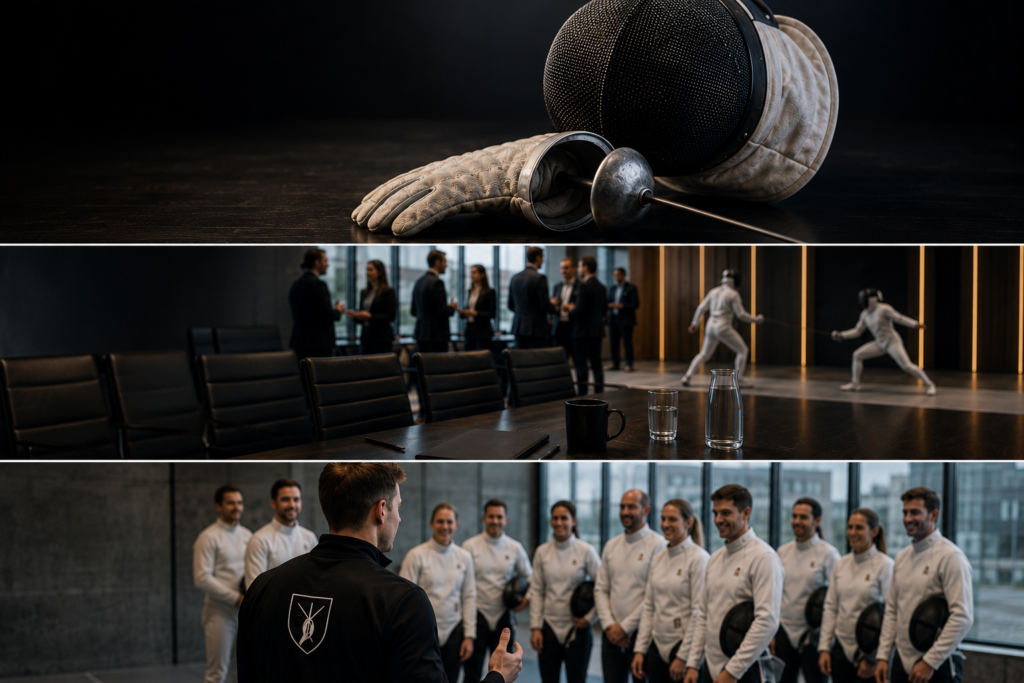
At Fencing Academy Denmark, that is the vision we are building toward. Not a sports organisation focused solely on sport, and not a business network focused solely on business, but a community where leadership, performance, trust, relationships, and human potential come together in meaningful ways.
Because when people grow, organisations grow.
When relationships strengthen, opportunities expand.
And when communities are built around performance, integrity, and development, the impact reaches far beyond any individual event, conversation, or experience.
The greatest results are rarely achieved alone. They are created by people who choose to learn together, grow together, and move forward together.
Why Network Matters More Than Reach
Modern marketing often focuses on visibility. More impressions, followers, more clicks.
More reach.
But visibility alone is not enough.
People buy from organizations they trust.
People partner with organizations they trust. People join organizations they trust. Trust is built through relationships. That is why we focus on network rather than exposure.
A meaningful conversation is more valuable than a thousand impressions. A trusted introduction is more valuable than a cold outreach campaign.
A strong relationship can create opportunities that advertising never will. Fencing Academy Denmark was designed around this principle. A curated environment where relationships develop naturally through shared experiences, common values, and meaningful conversations.
What Makes the Fencing Mindset Relevant for Business?
Because business today requires exactly the same qualities that define success on the piste:
Focus
Clear priorities.
Discipline
Consistent action.
Strategy
Thinking ahead.
Adaptability
Reading change and adjusting quickly.
Resilience
Remaining calm under pressure.
Courage
Acting decisively when it matters.
Precision
Executing with quality.
Relationships
Building trust that lasts.
These qualities are not theoretical.
They are practical.
They are trainable.
And they create measurable business impact.
The Future Belongs to High-Performance Communities
The strongest organizations of the future will not operate in isolation.
They will belong to ecosystems.
Communities.
Networks.
Partnerships.
Places where ideas, relationships, and opportunities flow naturally.
The future belongs to organizations that understand that growth is not only created through strategy. It is created through people, trust, shared experiences abd meaningful relationships.
This is exactly what we are building at Fencing Academy Denmark.
A place where performance meets business.
A place where elite sport becomes a platform for leadership, development, employer branding, customer engagement, and business relationships.
A place where companies can strengthen how they are seen, chosen, and trusted.
An Invitation
You do not need to understand fencing to benefit from the fencing mindset.
You simply need to believe that people perform better when they are connected.
That relationships matter.
That culture matters.
That development matters.
That performance is built long before results appear.
Whether you are a business leader, HR professional, entrepreneur, team manager, or simply curious about new ways of developing people and organizations, we would love to start the conversation.
Because fencing is not really about swords.
It is about people.
It is about decisions.
It is about trust.
It is about growth.
And ultimately, it is about achieving higher goals and better results together.
Fencing Academy Denmark
#BusinessPerformance
#LeadershipDevelopment
#EmployerBranding
#HighPerformanceTeams
#FencingAcademyDenmark